


If your hospital marketing in India still looks like 2020, you are already missing out on your patients to smarter, digital-first competitors. Hospital marketing has entered a new era where data, trust, and digital visibility take centre stage, redefining the way patients choose their healthcare providers. Today, what’s changing is not just the channel but the mindset of the people. People no longer rely solely on referrals or proximity. They research. They compare. They read reviews, and they make confident, informed decisions before they step through your doors.
In this environment, visibility is not just about being present; it’s about being credible, discoverable, and patient-friendly at every digital touchpoint.
Hospitals no longer compete on infrastructure or clinical expertise alone. And yet most of the hospitals in India still rely on word-of-mouth and traditional advertising to fill their OPDs. Websites lack clarity, patient reviews are unmanaged, search rankings are inconsistent, and communication is not clear. The result is a silent loss of patients, not because of poor care but because of weak digital positioning. This is where the hospital marketing in India begins to deliver measurable impact.
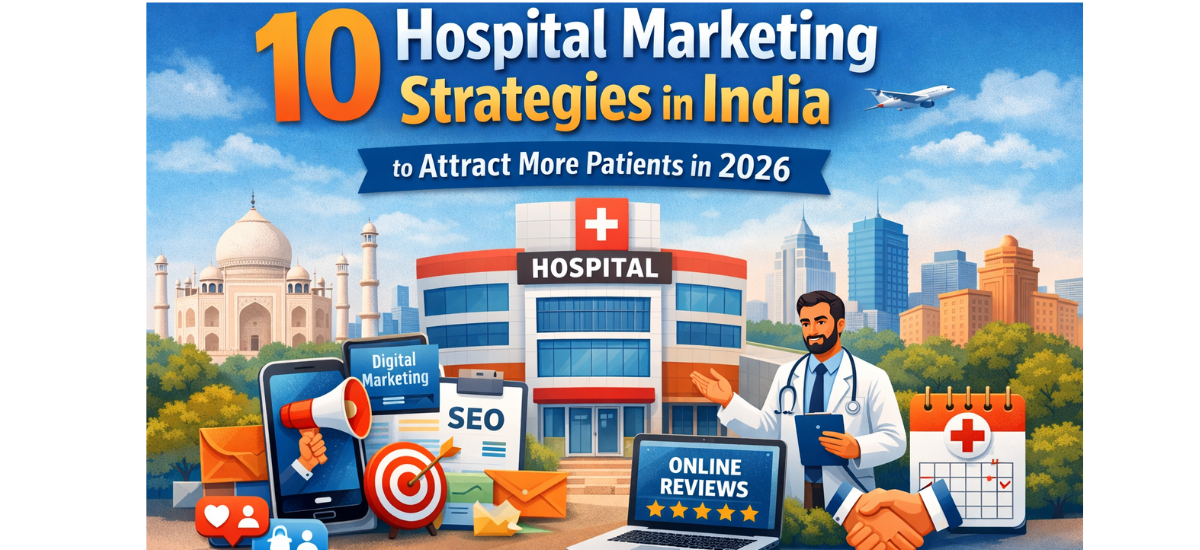
This blog breaks down 10 proven healthcare marketing strategies designed for 2026, built for the Indian healthcare market to build lasting trust and grow your practice with purpose.
Strategy #1: Develop a Patient-First Digital Front Door
For any healthcare practice, the website is the first point of communication with patients and often the deciding factor in whether they choose to stay or drop off. In 2026, a website must go beyond basic information and deliver a fast, intuitive, and trust-driven digital experience.
An effective hospital website should be a seamless blend of performance, clarity, and patient convenience. Every page should guide users toward action through clear CTAs such as ‘Book Appointment’, ‘Find a Doctor’, and ‘Call Now’, reducing friction in the decision-making process. At the same time, the website must maintain fast loading speeds, ideally under 3 seconds on mobile, to prevent drop-offs and ensure a smooth user experience.

Strategy #2: Invest in SEO for Hospitals
SEO stands for search engine optimisation, and it plays an essential role in how patients find your hospital online. It is no longer a tactical activity but a core growth driver in hospital marketing in India.
A strong SEO strategy involves keyword integration, on-page optimisation, and off-page authority building with structured backlinking. These elements, when aligned effectively, ensure that your hospital appears at the right time for the right patient queries.
On-page SEO ensures that your hospital is discoverable when patients search for relevant treatments and services, while off-page SEO focuses on building your hospital’s credibility and authority beyond your website.
The key to successful hospital marketing strategies in terms of SEO is maintaining consistency to see a 3x-5x increase in organic patient enquiries with zero cost per click.

Strategy #3 : Create Content That Guides Patient Decisions
If you still consider content a supporting activity, you are likely missing a core pillar for patient acquisition. For hospital marketing in India, content means delivering the right information at the right stage of the patient journey.
This includes :

Strategy # 4 : Run Ads That Convert Into Patients
Google ads and Meta ads are not only about generating clicks, but they are also about attracting the right patients who are ready to take action. When ads are combined with SEO, it creates a strong and consistent visibility for your hospital, ensuring that you appear across both paid and organic results during critical patient search moments.
To make ads truly effective in 2026, you must shift your targeting from generic to intent-driven advertising strategies.
The alignment of the ad with the landing page is crucial, as every campaign you run must lead to a dedicated page that clearly communicates the service, matches the intent of the ad, and guides the patient toward taking action.

Strategy #5 : SEO for Google AI Overviews
When you search on Google today for symptoms or treatments, a significant portion of the screen is occupied by AI-generated overviews that provide direct answers before you even scroll to traditional results, in comparison to what the users experienced two years ago.
This shift urges hospitals and healthcare brands to not only rank on the first page but also have structured content that can be picked up and reflected in the AI overviews.
To leverage this, hospitals must focus on creating clear, question-based content that directly answers patient queries. Content should be optimised with relevant keywords while maintaining clarity and credibility, as Google prioritises reliable and well-organised information for AI summaries.

Strategy #6: Leverage The Power Of Social Media
Having a social media presence is no longer an option for hospital marketing in India. It is still a great channel for connecting with patients and creating trust and familiarity. Patients explore these platforms to validate the hospital’s credibility, understand the treatments offered, and observe how healthcare providers engage with their audience.
Share consistent value-driven content like patient success stories, doctor-led videos, and awareness posts to position your brand in the eyes of the audience. With regular engagement through comments, messages, and interactive formats, hospitals can strengthen relationships, improve recall, and stay relevant throughout the patient’s decision-making journey.

Strategy # 7 : Local SEO & Google Maps
For hospitals, visibility at the local level directly impacts patient footfall. Patients usually search for a hospital near me or the best dentist in Agra. Therefore, to become visible and discoverable in your city and in your region, your presence on Google must be strategically optimised, especially through an optimised Google Business Profile, localised landing pages, and accurate NAP (Name, Address, Phone number) information across all platforms.

Strategy # 8 : Use Data Analytics & Performance Marketing
Hospital marketing in India in 2026 is driven by data, not assumptions. To rank higher in search engines and to maintain consistency, it is crucial to track, measure, and optimise every aspect of your marketing performance.
Hospitals must track the performance of key metrics such as website traffic, keyword rankings, conversion rates, and patient enquiries to identify what is driving results and where improvements are needed.

Strategy# 9 : Build an Omnichannel Brand Ecosystem
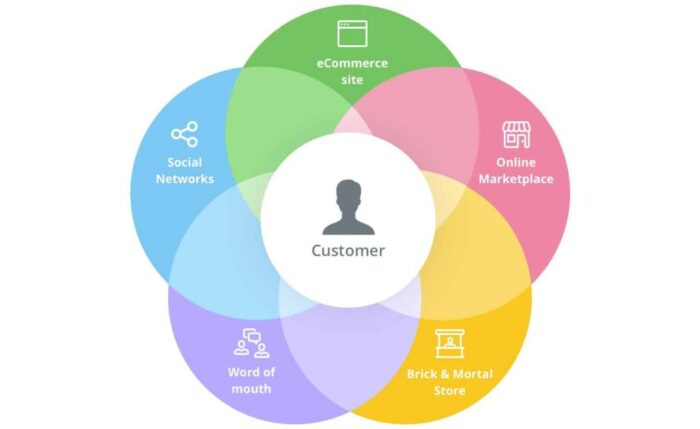
Omnichannel is a powerful marketing strategy for healthcare marketing in India, as it ensures a seamless patient experience across all touchpoints, from digital to offline interactions. Whether they interact with your hospital through ads, search results, your website, social media or directly at the hospital, the messaging should remain consistent. This alignment reduces confusion, builds trust, and increases the likelihood of conversion.
Strategy # 10 : Implement Patient Relationship Management (CRM) & Retention Marketing
Acquiring patients one time is not enough; sustainable growth in hospital marketing in India comes from building long-term relationships and ensuring patients return when they need care again. For this, you have to automate appointment reminders, follow-ups, and health checkup notifications. Along with this, you can also run personalised communication and can also re-engage the inactive patients with targeted campaigns.
Also Read : Video Marketing For Orthopaedic Surgeons
Hospital marketing in India is no longer about isolated efforts; it is about building a patient-first ecosystem that drives visibility, trust, and long-term growth. From creating a high-performing website to local SEO, content marketing, and social media presence, each element works together to shape how patients discover, evaluate, and ultimately choose your hospital.
At Brand Medix, we help hospitals become the first choice by aligning marketing with how patients search, evaluate, and decide in 2026.